Dry Loads Again: Dryer Repair in Silver Spring
A no-heat call usually starts at the vent, because trapped heat trips the dryer's safety fuse. The tech looks at the duct run first, then the parts inside.
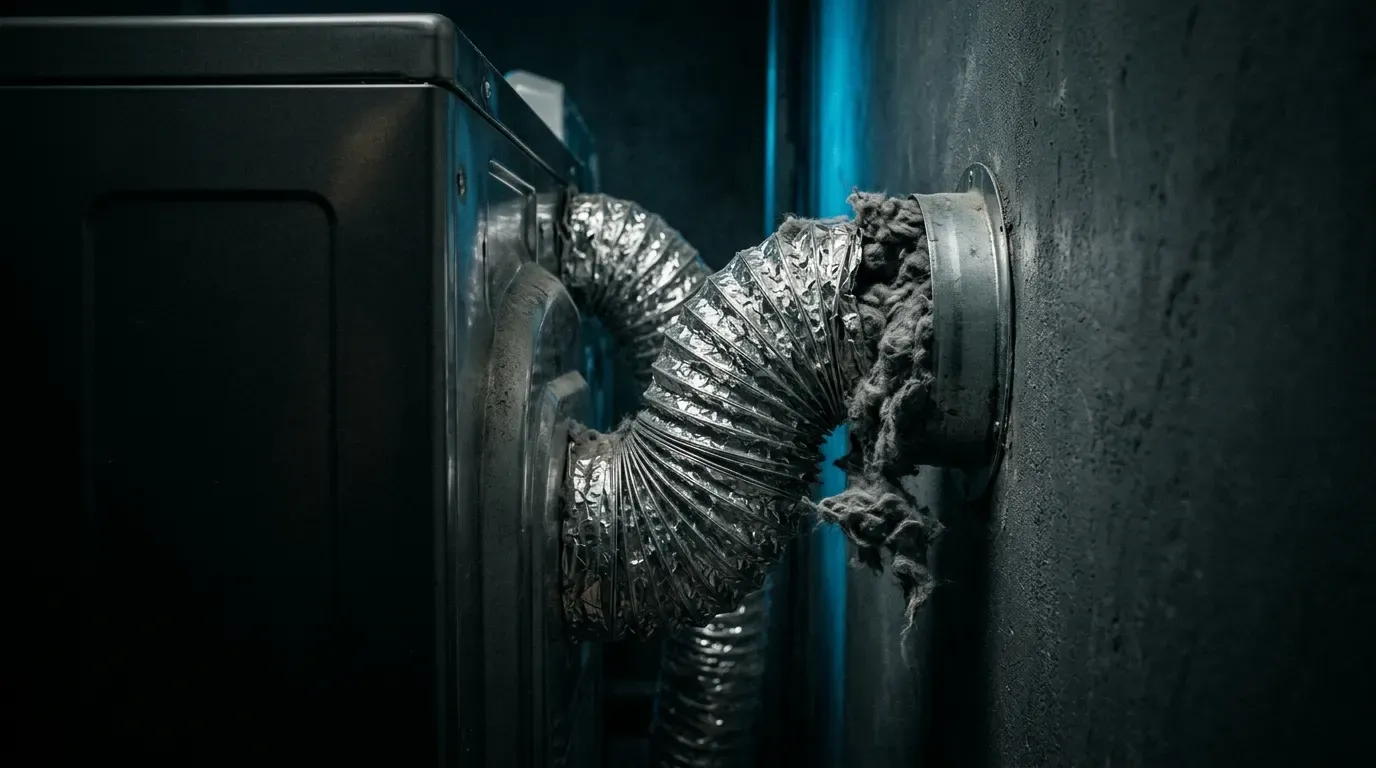
Drum turning, no heat coming out
A dryer that turns but gives no heat has often blown its thermal fuse, and the fuse blew for a reason. Silver Spring Appliance Fix books dryer repair visits across Silver Spring, Hyattsville and the Maryland suburbs, for gas and electric dryers, and on a no-heat call the vent is checked before a new fuse goes in.
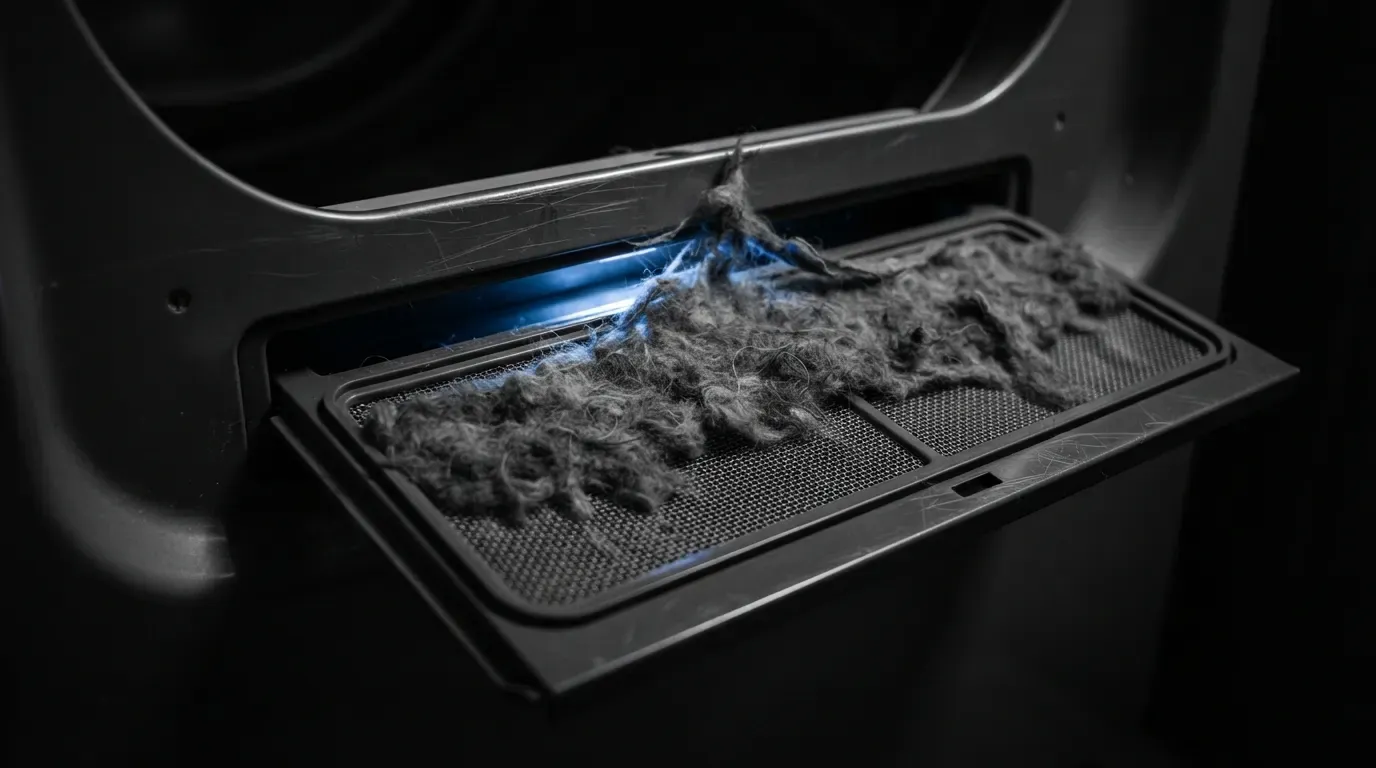
The thermal fuse is a one-time safety part on the exhaust housing. When lint in the duct holds heat inside the cabinet, the temperature climbs until the fuse opens and cuts the heat for good. A new fuse on a dryer with the same clogged vent will blow again.
That is also a fire question. The U.S. Fire Administration found that failure to clean was the leading factor in home clothes dryer fires from 2018 to 2020, behind 31% of them. Lint left in the duct and the blower housing is the kind of buildup that finding describes.
Long duct runs in older houses and high-rise exhaust
Much of Silver Spring's housing went up before 1960, long before a dryer was part of the plan. In older houses the dryer often sits wherever the laundry could fit, and the duct runs across a basement ceiling, through a joist bay or up through a wall to reach the outside. Every extra foot and every elbow slows the air and catches lint.
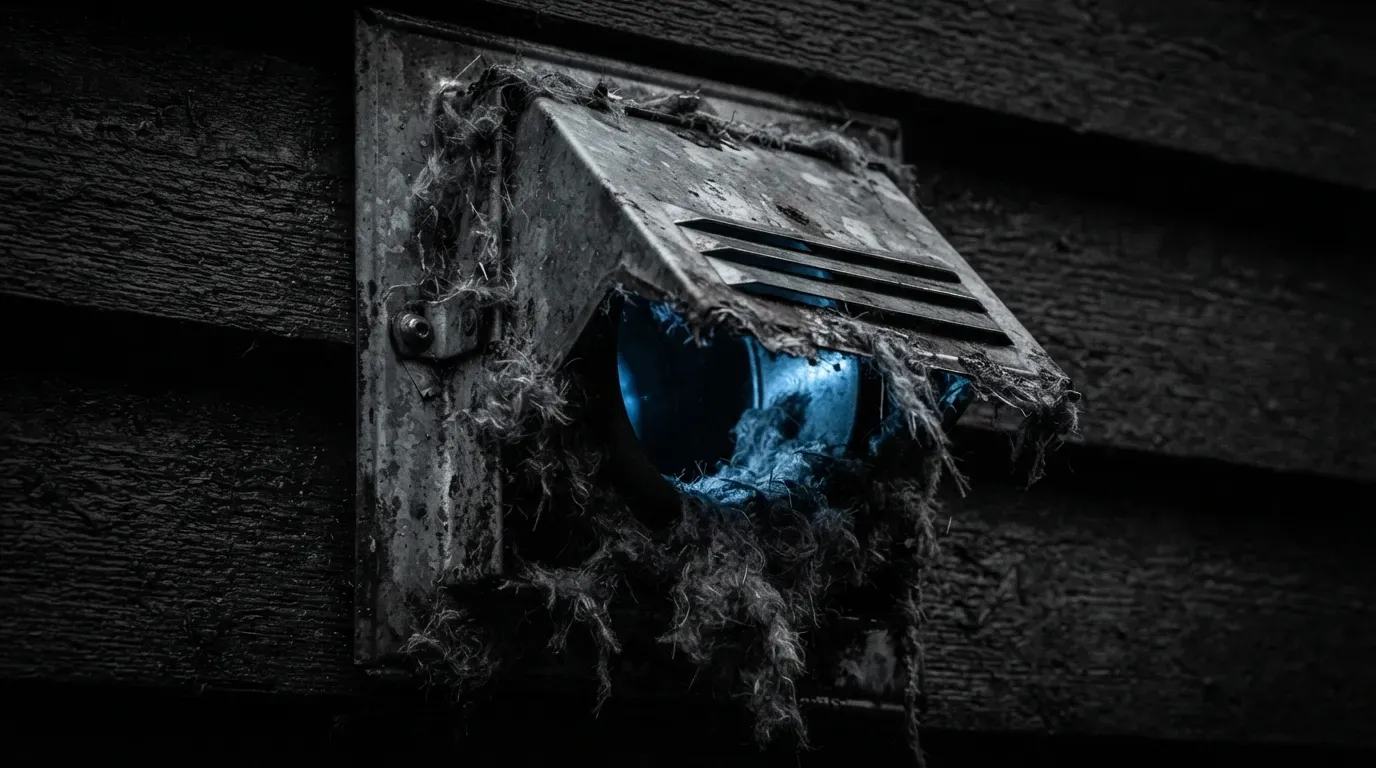
The older houses in Hyattsville raise the same question. A dryer in a back corner of the basement with a vent on the far wall needs the full run checked, not only the first few feet behind the machine.
Apartment and condo dryers have the opposite problem. The duct is short, but it often feeds a shared exhaust shaft or a long horizontal run to the outside wall, and the dryer sits in a closet with little room for the hose to bend without kinking.
On the visit the tech checks:
- the transition hose behind the dryer, for crushing and tears
- airflow at the outside cap or the point the duct leaves the unit
- lint in the blower housing and behind the lint screen
- the duct material and how many turns the run takes
Cold drum on a gas dryer versus an electric one
Say which kind you have when you phone. The same complaint sends the tech to different parts.
| What to check | Electric dryer | Gas dryer |
|---|---|---|
| Power and fuel | Electric dryers run on a 240-volt circuit with two breaker legs. One side can trip and leave the drum turning with no heat. | The gas valve on the line behind the dryer can get bumped closed when the machine is moved. |
| Safety parts | Thermal fuse on the blower housing, high-limit thermostat on the heater housing. | Thermal fuse on the blower housing, high-limit and flame rollout switches at the burner. |
| The heat source | Heating element, an open coil that can break or short to the housing. | Igniter, flame sensor and the gas valve coils that open the valve. |
| Common pattern | No heat at all points to the element, a fuse or one breaker. | Heat that starts, then quits a few minutes in, often points to the valve coils. |
Signs the airflow is behind the trouble
Two cycles for one load of towels
The heat is on, but damp air has nowhere to go, so the clothes sit in their own steam.
The top of the cabinet is hot to the touch
Heat that should leave through the duct is building up inside the dryer.
Lint on the floor behind the machine
A loose or torn connection is blowing lint into the room instead of outside.
The outside flap barely moves
With the dryer running, a weak puff at the wall or roof cap means a restriction somewhere in between.
A vent warning on the display
Newer LG and Samsung dryers measure exhaust restriction and report it as a code; the LG and Samsung pages list them, and Whirlpool’s airflow code is in the error code library.
Burning smell or gas odor from the dryer
- If you smell gas, leave the house without switching anything on or off, and call 911 from outside.
- For a burning smell, stop the cycle and unplug the dryer.
- If there is smoke or flame, keep the dryer door shut, get out and call 911.
- Once it's off and cool, phone us and say what you smelled.
Squeals, thumps and a drum that won't turn
Noise points to the drive side: drum rollers or a rear bearing that squeal, a worn glide or felt seal that scrapes, an idler pulley that chirps. A drum that won't turn while the motor hums usually has a broken belt.
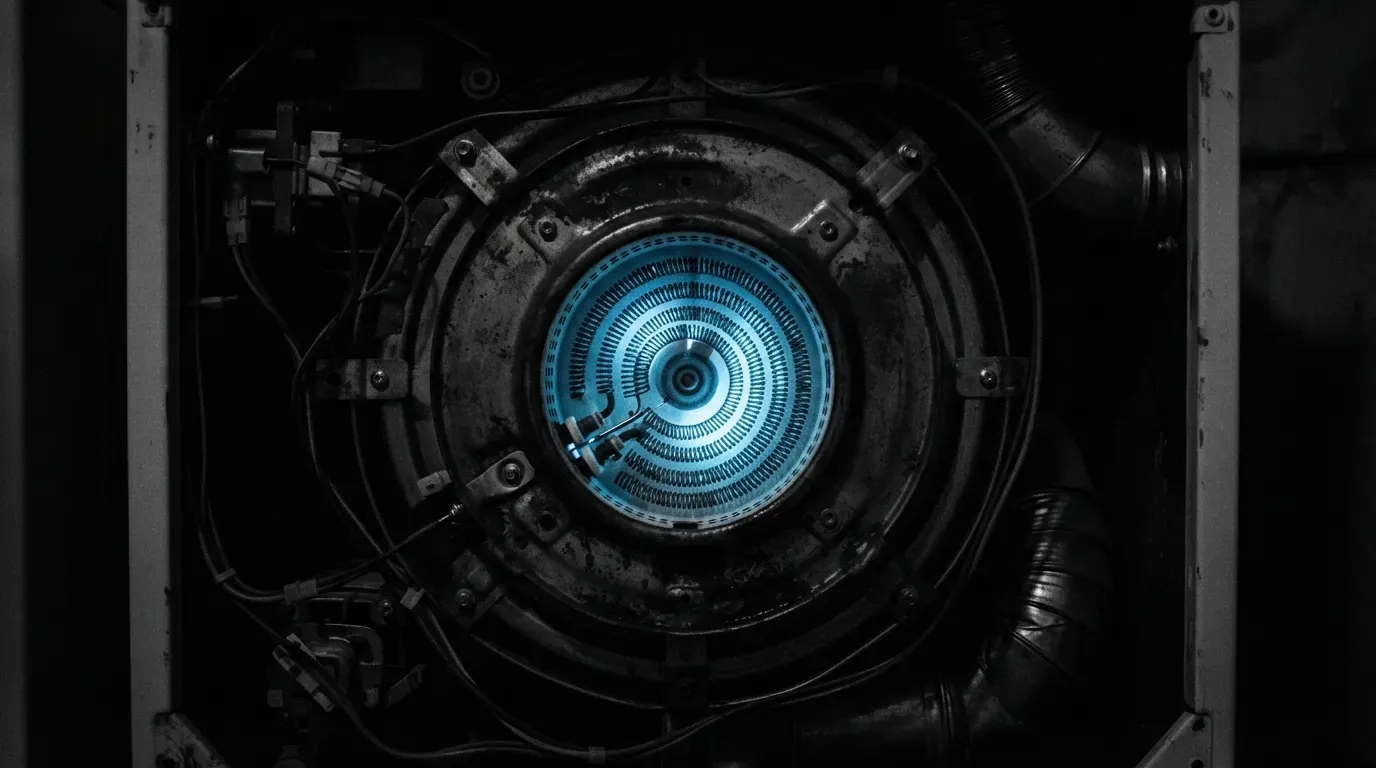
None of these are large parts on most dryers, and the written price for them is usually modest. The appliance repair cost guide covers what moves the price, and the washer repair page covers the other half of a stacked pair.
Dryer questions callers ask before booking
Why does my dryer run but not heat?
Why does my dryer smell like burning?
Is it safe to keep running a dryer that shuts off mid-cycle?
Is the white foil or plastic duct behind my dryer a problem?
Why do my clothes take two cycles to dry?
Can you work on a condo dryer that vents into the building shaft?
Is it worth fixing a 20-year-old dryer?
Clothes still damp after a full cycle?
Say gas or electric, and roughly how far the vent runs to the outside wall. We set the visit around those answers before you hang up.