Fridge Warm Again? Refrigerator Repair in Silver Spring
A warm fresh-food side usually traces to a stalled fan or an iced-over coil. The tech tests both before anyone opens the sealed system.
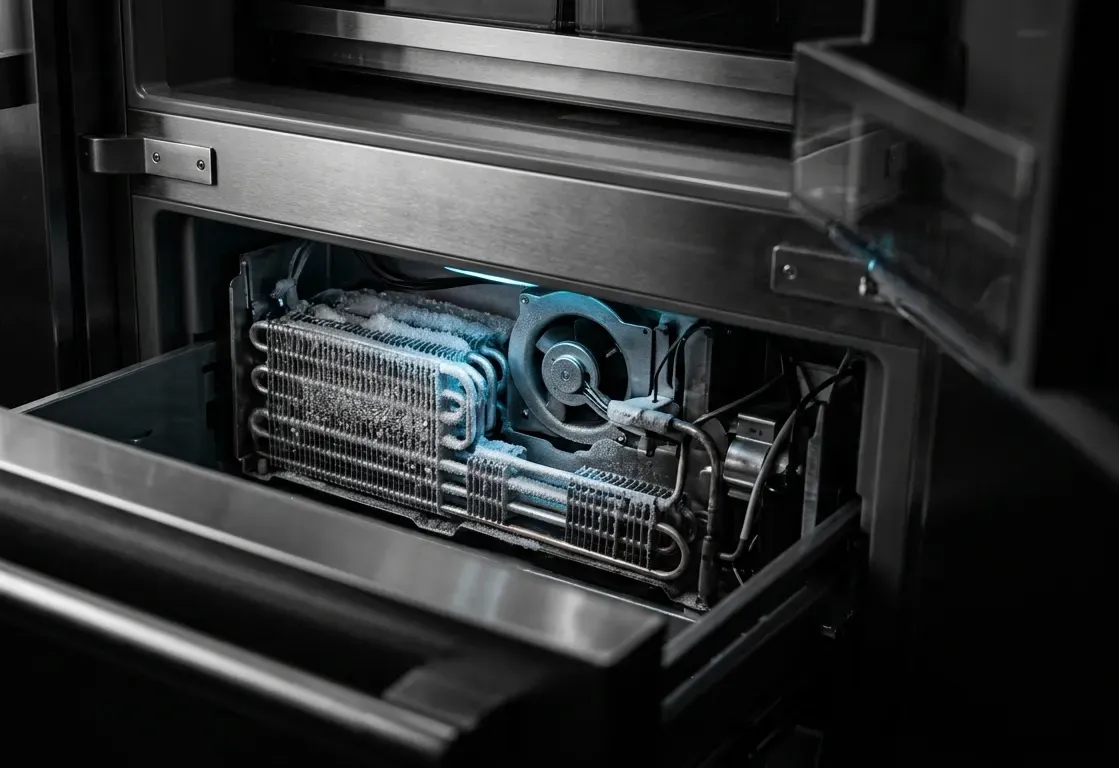
Milk going warm while the freezer holds
A fresh-food section that warms up while the ice cream stays hard is a classic refrigerator symptom, and it rarely means the compressor has failed. Silver Spring Appliance Fix books refrigerator and freezer repair visits across Silver Spring, Hyattsville and the Maryland suburbs, and on this symptom the tech starts with the fans and dampers that move cold air before the compressor that makes it.
On almost every self-defrosting fridge, the cold is made in one place: an evaporator coil behind the back panel of the freezer. A fan pulls air across that coil and pushes some of it through a channel or damper into the fresh-food section. If the fan stops, or frost seals over the coil, the freezer still feels cold because it sits right next to the coil. The fresh-food side, at the far end of the air path, warms first.
That is why the order of the visit matters. Fans and defrost parts are tested before the sealed system, and a compressor diagnosis comes only after they check out.
The parts behind a warm refrigerator, in the order they get tested
The cheaper, more common faults come first. Each one has a sign you can often spot from the kitchen.
Evaporator fan
The freezer stays cold but the fresh-food side drifts up. Open the freezer and listen: on most self-defrosting models you should hear the fan running when the compressor is on. Silence, or a blade that ticks against ice, points here.
Defrost heater, sensor or timer
Frost builds on the back panel of the freezer until it chokes the air path to the fresh-food side. A heater that has burned open, a sensor that never calls for defrost, or a stuck timer or board all end in the same white wall of ice.
Air damper
On top- and bottom-freezer models, cold air reaches the fresh-food section through a damper. A damper frozen shut or stuck closed starves that side even with a healthy fan.
Condenser coils and condenser fan
Coils under the fridge or behind a grille pack with dust and pet hair. Heat can't leave, the compressor runs long, and both sections warm a few degrees at a time.
Start relay and overload
A click from the back, a few seconds of hum, then nothing, repeating every few minutes. The plug-in relay on the side of the compressor fails far more often than the compressor itself.
Compressor and sealed system
Both sections warm, fans running, coils clean, relay good. Only then does the tech look at the compressor, a refrigerant leak or a restriction in the lines.
What refrigerator repairs cost Consumer Reports members
Consumer Reports surveyed 95,711 of its members about 108,573 refrigerators bought between 2012 and 2022. The figures below are national medians from that survey, updated in January 2024, so read them as a guide to scale. Labor in the Washington area tends to run above national figures, and the appliance repair cost guide explains why.

The gap between the two rows is the reason the visit tests the fan, the relay and the defrost parts first. Most warm-fridge faults sit in the first row.
| Repair | Median cost reported |
|---|---|
| Seven common problems | About $150 to $240 |
| Compressor | $562 |
| Fixed on the first visit | 62% of repairs |
Keeping the food safe until the visit
The FDA's mark is 40°F or colder in the fresh-food section and 0°F in the freezer. An appliance thermometer on a middle shelf tells you which side of 40°F you're on, and the reading is useful to the tech too.
Federal food-safety guidance gives a closed refrigerator about 4 hours of safe cold once it stops cooling. A full freezer holds for about 48 hours with the door shut, and a half-full one about 24. Perishables such as meat, fish, eggs and leftovers that sat above 40°F for more than 4 hours should go.
While you wait
- Keep both doors shut as much as you can.
- Move milk, meat and leftovers to a cooler with ice.
- If it smells of burning or trips the breaker, unplug it.
- Then phone us with the brand and model number.
French-door, side-by-side or built in: where each one gives trouble
The layout decides where the evaporator sits and how much has to come apart to reach it, so say which kind you have when you phone.
French-door and bottom-freezer
The freezer drawer sits below, so the evaporator and fan are often reached from inside the freezer or behind its back panel. Ice maker and fill-tube faults in the door are common on these.
Side-by-side
One tall evaporator feeds both sides. Ice in the dispenser chute and a frozen fill tube show up here often, and a narrow freezer makes the back panel harder to reach.
Top-freezer
The simplest layout, and the cheapest to fix in most cases. A warm bottom section usually comes back to the damper or the evaporator fan above it.
Built-in, panel-ready and column units
Sub-Zero, Thermador, Viking and similar units sit in a cabinet opening with custom panels. The condenser is reached at the top grille or behind the kickplate, and pulling the unit out takes time and care with the panels.
Chest and upright freezers
Standalone freezers in a garage or basement have fewer parts. A chest freezer that frosts heavily usually has a lid gasket problem; an upright self-defrosting model fails much like a fridge freezer.
Brand codes and warranty terms to read out on the call
Many newer refrigerators store a fault code, and the code is the first thing the tech reads. Write it down before anyone resets the power, because some brands clear it on a restart.
Samsung fridges flag fan and defrost sensor faults with codes such as 22E and 5E, and LG uses an Er prefix with codes like FF and dH. The Samsung repair page and the LG repair page list what each one means and what the compressor warranty covers.
Built-in refrigeration carries longer sealed-system coverage than most freestanding fridges, which changes the conversation when the compressor is the suspect. Sub-Zero, Thermador and Viking each have their own page with the terms.
Whirlpool, GE, Frigidaire and KitchenAid fridges follow the same diagnosis on this page: fans and defrost parts, then the condenser, then the sealed system. Their codes are collected in the appliance error code library.

When the compressor is the problem
A failed compressor or a refrigerant leak is the one refrigerator repair that makes owners stop and think. Once the tech has ruled out the relay, the fans and the defrost system, the written price for sealed-system work comes with what it covers: the compressor or the leak repair, the refrigerant recharge and the time to braze and test the lines.

Hold that number against the age of the fridge and what a replacement of the same size and layout would cost. The repair or replace guide walks through that decision with real thresholds. On a built-in, the sealed-system warranty can change that math, so mention the install date when you phone. Appliance repair in Bethesda and Potomac has its own pages.
Refrigerator questions from Silver Spring kitchens
My fridge stopped working with a full load of groceries. Is that an emergency?
Why is my freezer cold but my fridge warm?
Why is my fridge not cooling but the light is on?
Why is my freezer not freezing, or not cold enough?
My power came back on. Why won’t my fridge get cold?
How long is food safe in the fridge without power?
Should I unplug the fridge before the tech gets here?
Why is my fridge leaking water inside?
The display shows normal temperatures but nothing is cold. What is going on?
Does a built-in or panel-ready refrigerator take longer?
Can a freezer be repaired on its own if the fridge is fine?
Fresh-food side creeping past 40°F?
Read us the brand and whether the freezer still feels cold. With your ZIP, those two answers are enough to set the visit within a couple of minutes.