Oven Repair in Silver Spring, Gas or Electric
Gas and electric ovens fail in different places. Name the fuel on the phone so the visit comes ready to test the right heat source.
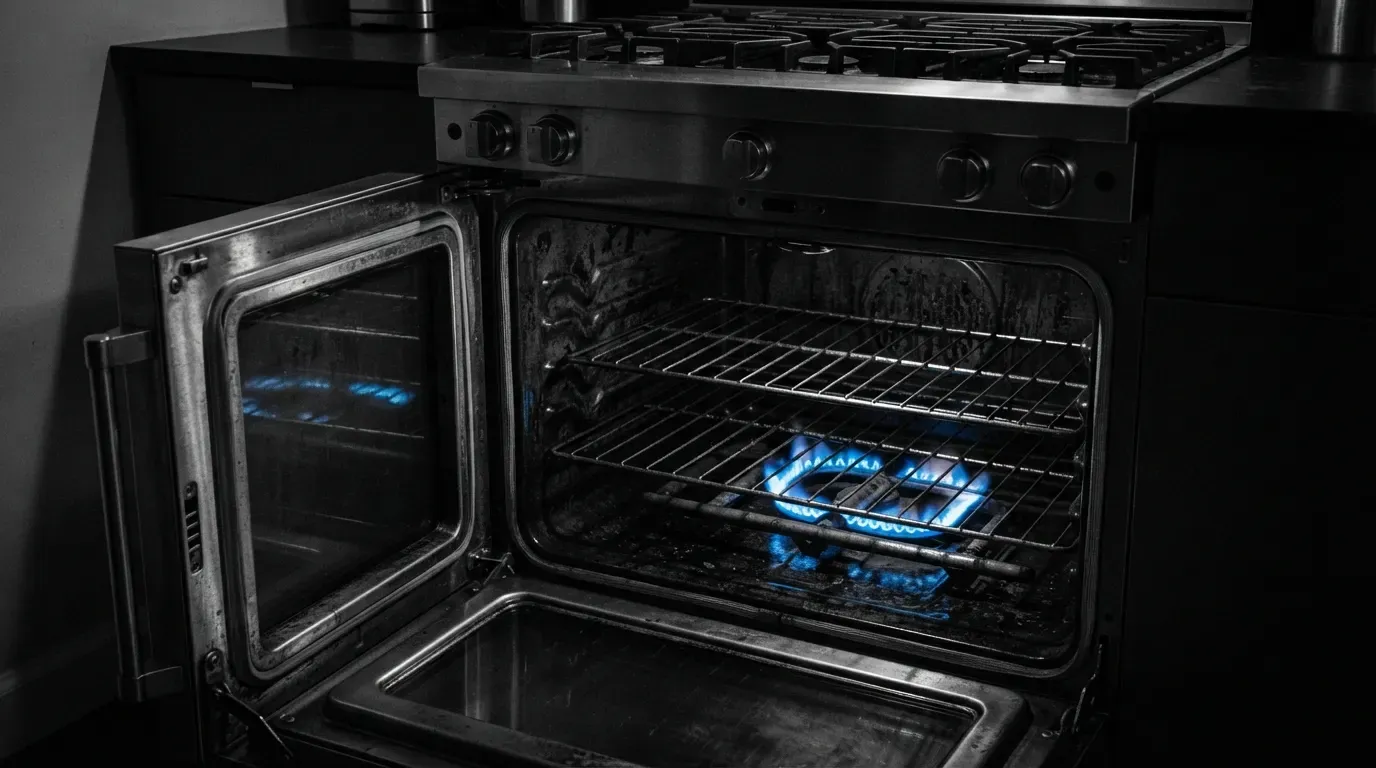
Gas oven or electric: where the heat stops
Silver Spring Appliance Fix books oven, range and stove repair across Silver Spring, Hyattsville and the Maryland suburbs, and the first question on the phone is the fuel. A gas oven and an electric oven can give the same complaint, a cold cavity at dinner time, for reasons that share no parts.
Gas: the igniter and the safety valve
Most gas ovens light with a hot-surface igniter, a small element that glows orange beside the bake burner. The gas safety valve opens only when enough current flows through it. As the igniter ages it keeps glowing but draws less, so the valve opens late or not at all.

On most models the broil burner has its own igniter. A broiler that lights while the bake side stays cold points straight at the bake igniter or its valve.
Electric: element, sensor and relay
A failed bake element often shows it: a blister, a split, or a bright spot where it burned through. When the element looks fine, the tech tests it anyway, then the temperature sensor on the back wall and the relay on the control board that switches power to it.
A sensor that reads wrong doesn't stop the oven. It makes the oven run hot or cool, so baking that comes out burned or underdone sends the tech to the sensor as well as the element.
Many newer electric ovens hide the bake element under the oven floor. A failure there is felt rather than seen: the oven heats slowly, mostly from the broil element at the top, and food browns on top while the bottom stays pale.
Range connections get checked along with the range. Older houses around Hyattsville and Silver Spring can have a 240-volt receptacle or a gas shutoff valve decades older than the range plugged into it, and a scorched cord terminal or a valve that won't open fully can mimic an oven fault.
If you smell gas near the range
- Leave every switch alone, including lights and the range knobs.
- Get everyone out of the house.
- From outside, away from the building, call 911 and the Washington Gas emergency line, 844-927-4427 (option 1). If BGE supplies your gas, as in parts of Howard County, call BGE instead.
- Once the gas company has cleared the house, phone us to set up the range repair.
F-codes on a GE oven display
GE publishes what its range and wall oven codes mean, and the meaning sets which part gets tested first.

| Code | What GE says | Where the tech starts |
|---|---|---|
| F2 or F20 | The oven passed a preset temperature limit for a reason the control couldn’t identify. | The oven sensor, the relay that holds the heat on and the control board. Keep the oven off until then. |
| F3 or F4 | Oven sensor fault. GE says the sensor usually needs replacing. | The sensor on the back wall and the harness that runs to it. |
| F9 or FC | A component in the door lock circuit failed. | The lock motor, its switches and the wiring between them. |
| FD | The meat probe or the jack it plugs into. | The probe first, then the receptacle in the oven wall. |
| F0, F1, F6 or F7 | Keypanel problem. GE says the keypanel often needs replacing. | The keypanel and its ribbon connection to the control. |
GE says switching the breaker off for a minute or two may clear a code. If the code comes back, GE's advice is to leave the oven off at the breaker until it's serviced. Codes for Whirlpool, Bosch and other brands are in the appliance error code library.
Door still locked after a self-clean
A self-clean cycle drives the cavity far past baking heat, and the door lock stays engaged until the oven cools. If the oven is cold to the touch and the latch still won't release, the lock motor, a lock switch or the control that reads them has failed.

Don't pry the door. The latch hook and the hinges bend, and that turns a lock repair into a door repair.
Pro-style ovens run longer cleans. On a Wolf dual-fuel range the cycle lasts about four hours, and the door stays locked until the cavity drops below 550°F; the Wolf repair page covers the rest of that range's behavior. Mention a sticking lock when you call even if the oven still heats, because the tech needs the door open to test the bake side.
Stove problems on the cooktop side of a range
Burners that tick or won't catch
The surface burners on a range use the same spark parts as a separate cooktop. The cooktop repair page covers spark modules, knob switches and radiant glass.
Reignition on pro ranges
Viking's SureSpark system relights a burner that goes out while cooking, so a brief tick after a draft is the system working. The Viking page says where normal ends.
A range that tips when the door opens
A freestanding range is held by an anti-tip bracket at the back foot. After any pull-out for service the bracket has to be re-engaged, and the tech checks it before pushing the range home.
An older range and the repair math
Gas ranges tend to outlast electric ones. The repair or replace guide has the expected lifespans to hold against the written price.
You only pay for work you agreed to.
Oven and range questions before the visit
What do I do if my oven smells like gas?
My gas oven takes much longer to preheat than it used to. Is it the igniter?
Can I still use the burners while the oven is down?
The oven runs hot compared with my oven thermometer. Is that a repair?
Oven stuck cold with dinner waiting?
Lead with gas or electric and any code on the display. From those two answers we offer a visit time before the call ends.