Garbage Disposal Repair in Silver Spring, MD
The sound it makes when you flip the switch tells the tech where to start. If a new unit makes more sense than a repair, you'll hear that plainly.
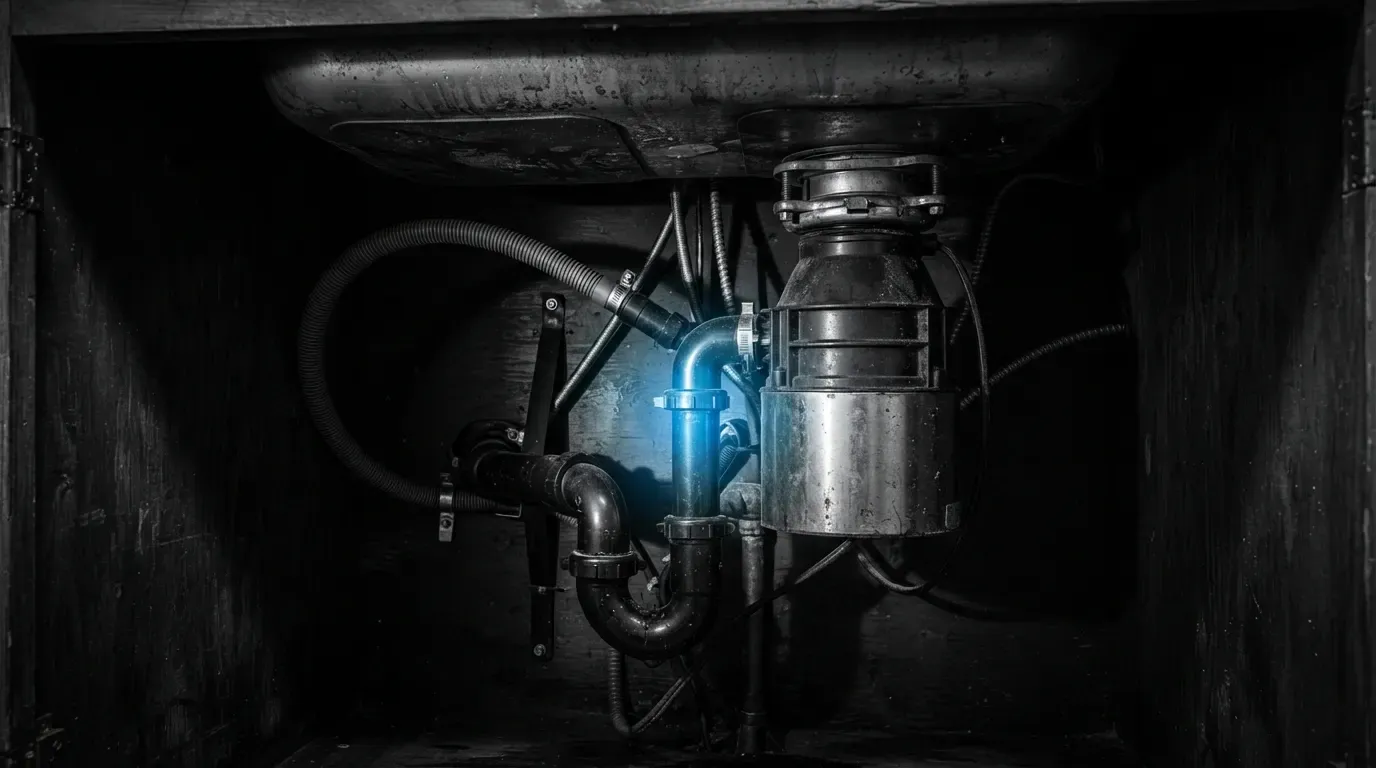
Hum, silence or a rattle: what each one usually means
Silver Spring Appliance Fix sets up garbage disposal repair and replacement for homes in Silver Spring and across Montgomery and Prince George's counties. A disposal gives away most of its trouble in the first second after the switch goes on, so start with what you hear. Water under the sink is its own question, further down this page.
| What happens | What usually causes it | Repair or a new unit |
|---|---|---|
| Hums, but nothing turns | A bone, pit or bottle cap locking the turntable in place, or a motor that seized after weeks of sitting unused | A jam is usually cleared on the visit. A seized motor usually means a new unit. |
| Silent, no hum at all | The overload reset tripped, a dead wall switch or outlet, a loose wire in the connection box, or a burned-out motor | Switch, outlet and wiring faults are repairs. A dead motor isn’t worth rebuilding. |
| Runs, then trips the reset again | The motor is running hot from a partial jam, worn bearings or a unit too small for how it’s used | Depends on what the tech finds. Worn bearings mean a new unit. |
| Grinding, rattling or a metal clang | A spoon, ring or screw in the chamber, or a broken lug on the turntable | A loose object comes out. Broken grinding parts usually mean replacement. |
Jammed, tripped or seized?
A jam is the good news. The motor is fine and something is holding the turntable still. The tech turns the flywheel loose from underneath, lifts out whatever locked it, and runs water through to check the grind.
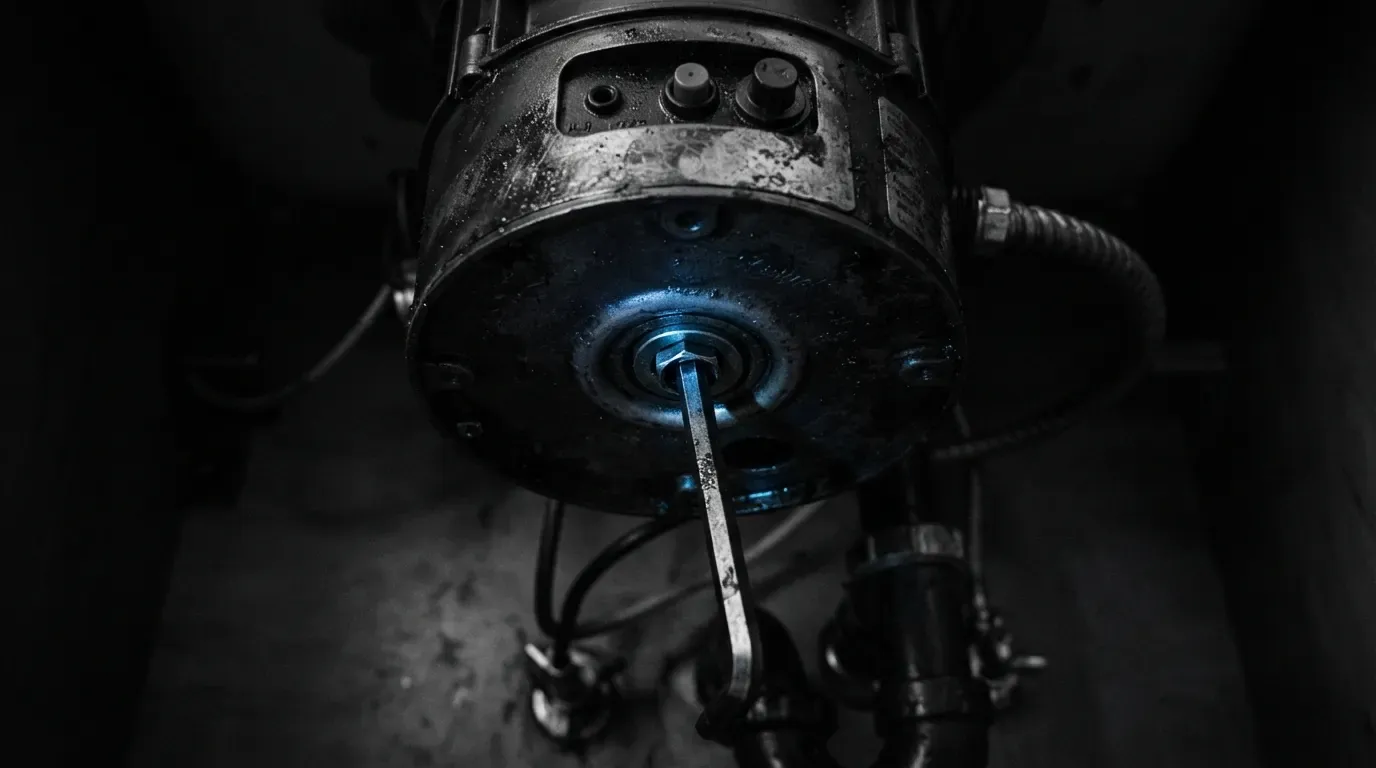
Repeated tries on a jammed unit cook the motor, and its thermal overload cuts the power to protect it. A disposal that hummed on Monday and is silent by Wednesday is often the same jam with a tripped overload on top.
A tripped overload with no jam behind it points somewhere else: a motor running hot on worn bearings, a small unit asked to handle more than it was built for, or a weak connection at the outlet or junction box under the sink. The tech checks the switch, the wiring and the motor's current draw before calling it either way.
A seized motor is a different case. Disposals that sit unused for weeks, in a rental between tenants or a house closed up for the season, can rust at the bearings and lock solid. If loosening the turntable doesn't bring it back to full speed, a new unit is the honest answer, and the written price will say so.
Before anyone reaches into the sink
- Turn the wall switch off, then unplug the unit under the sink or switch off its breaker.
- Keep hands out of the drain opening even with the power off. The grind ring edges are sharp.
- Skip the chemical drain opener. If some is already in there, say so on the call.
- Phone us with the brand and model from the label on the bottom of the unit.
When the dishwasher drains through the disposal
In most kitchens with both, the dishwasher drain hose clamps onto an inlet on the side of the disposal. A disposal that's jammed or packed with scraps blocks that path, and the dishwasher ends up with water standing in its tub or pushing up into the sink. The fault is at the disposal, so the tech checks it before calling it a dishwasher problem.
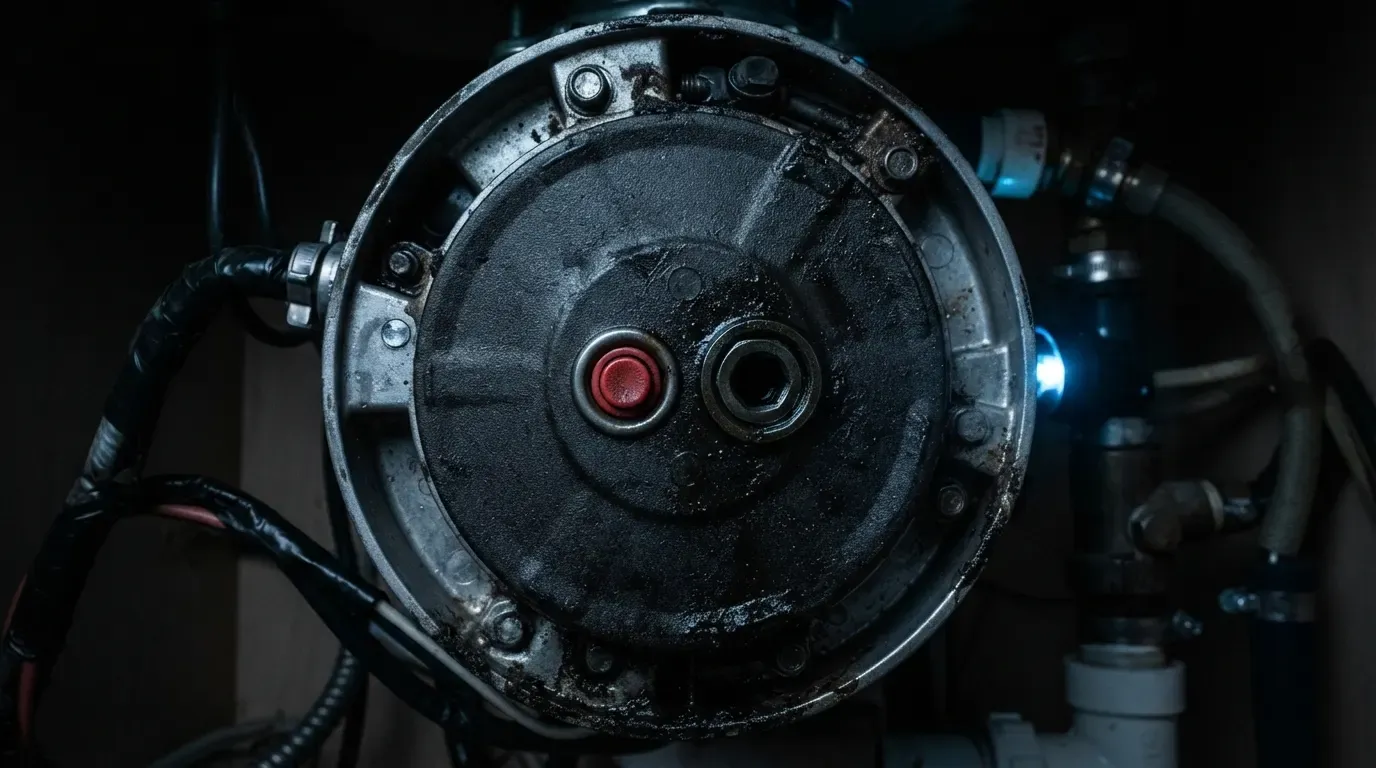
Every new disposal arrives with that inlet sealed shut by a plastic knockout plug. Left in during a swap, it stops the dishwasher draining from the first load. The dishwasher repair page follows the same water from the dishwasher's side.
What the written price weighs
A disposal doesn't hold many serviceable parts. The sink flange seal, the side connections, the mounting ring and the wiring can be repaired. The motor and the grinding chamber, for the most part, can't.
A unit leaking from its bottom, running on worn bearings, or past the lifespan the repair or replace guide lists for disposers is usually priced as a replacement. The cost guide explains what moves repair prices in the DC suburbs. You only pay for work you agreed to.
Water in the sink cabinet: top, side or bottom
Dry the outside of the disposal with a towel, run a little water, and watch where the first drop forms. That one detail tells the tech most of what the visit needs.
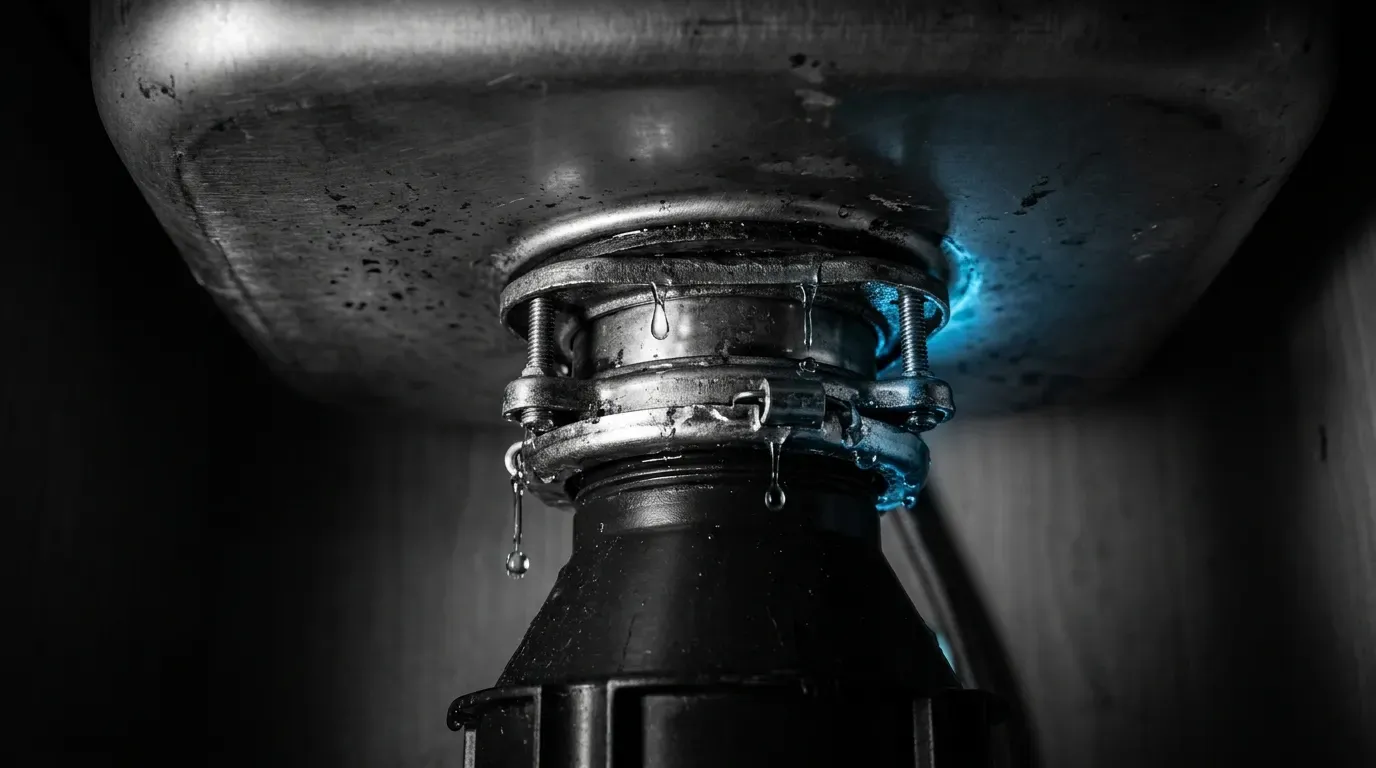
At the top, where it meets the sink
A drip here is the sink flange. The seal under the drain lip has dried out or the mounting ring has worked loose, and resealing it keeps the disposal you have.
On the side
Two connections live here: the dishwasher inlet, where a hose clamp can loosen, and the discharge tube to the drain trap, which seals with a rubber gasket. Both are parts-level repairs.
Out of the bottom
Water from the bottom of the housing, or around the reset button, means the internal seal has failed and water is reaching the motor. There's no repair for that. You get a written price for a new disposal sized to the sink opening, with the dishwasher connection matched to yours.
In a condo tower around downtown Silver Spring or Bethesda, a slow drip in the sink cabinet can reach the unit below before anyone sees it upstairs. Phone as soon as the cabinet floor is wet, and mention any building access rules the tech will need.
What people ask about a broken disposal
Where is the reset button, and is it safe to press?
I poured drain cleaner into the disposal. Is that a problem?
Can I switch from a continuous-feed disposal to batch-feed?
The disposal runs fine but the sink drains slowly. Is it the disposal?
Will a new disposal fit where the old one was?
Sink full and the disposal won't turn?
Start with the sound it makes and whether the dishwasher drains through it. With that and your ZIP, we can set the visit before you hang up.